Home Blog Page 23

Forged in Fire: The rise and fall of Spring Valley’s smelter era

0
Submitted photo

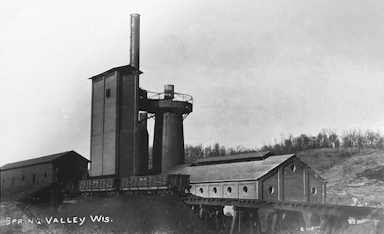
SPRING VALLEY, WI – Ore, flux, and heat. These three ingredients required for smelting iron marked Spring Valley’s era as a boom town. While the earliest settlers began arriving in the 1860s and businesses such as sawmills started to appear, it was the promise of iron that marked the true beginning of Spring Valley’s industrial era.

Local geologist Prof. W.W. Newell began prospecting the area in the late 1870s. His efforts led to the discovery of the Cady Creek Mines. After a brief venture westward in search of gold, Newell returned and made a more significant find: the Gilman Mine, just a mile and a half west of the village.

This discovery catalyzed the decision to build a full-scale smelting operation in Spring Valley. A furnace was transported from Youngstown, Ohio, where it had outlived its original purpose. The timing coincided with the closure of a major smelter in Black River Falls, sending experienced iron workers searching for new opportunities—many of them settling in Spring Valley.

To read this and other premium articles in their entirety, pickup the July 31, 2025 issue of the Sun-Argus newspaper. Click to subscribe for convenient delivery by mail, or call (715) 778-4990. Single issues are also available at area newsstands and our office in Spring Valley, WI.

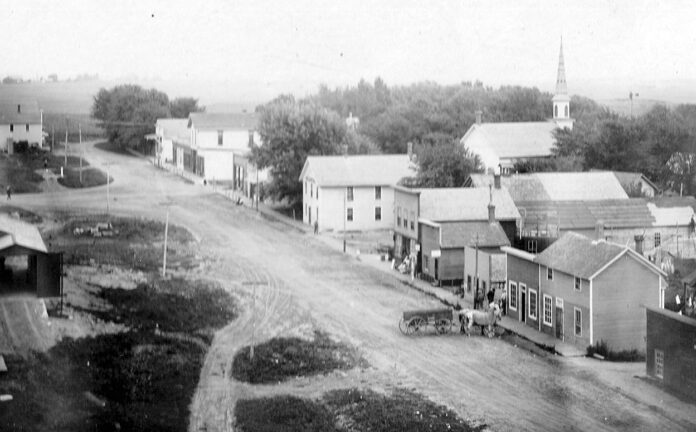
The train pulls into Roberts Station

0
Main street 1904. Submitted photo

Submitted by Cindy Brown Bauer, Roberts Sesquicentennial Committee

ROBERTS, WI – The community of Roberts Wisconsin is celebrating a milestone year- 150 years! The village will be commemorating their Sesquicentennial with a three-day event this October.

George Longworth and family are said to be the first settlers in the Roberts/Warren area, arriving about 1855.  By 1860, the population was great enough to petition the county to be set off from Hudson to become a separate township, the Town of Warren.  The population center was located at the current day western-most intersection of US Hwy 12 and WIS 65.  Warren Center, as it was called, was in the middle of the township and consisted of a store, meeting hall, blacksmith shed, a school and several houses.

In October of 1871, the West Wisconsin Railway laid their tracks through Warren just a half mile south of the settlement.  The Railway ran from Tomah to Hudson.  The next year in 1872 a depot was added and called “Roberts Station”.  It was named after a chief engineer of the Railroad, John Bannister Gibson Roberts.   By 1874 several buildings had been erected in Roberts:  Graham and Bowne’s General Store, Hill’s Elevator, Comstock Hall and a grain storage building.  In 1875, the village of Roberts was platted.  The post office was moved into the village in 1874, and officially changed from Warren to Roberts in 1884.

The Community of Good Neighbors will be hosting a Sesquicentennial Celebration October 3, 4 and 5 with live music, food stands, historical events and wagon rides.

Follow the Roberts Sesquicentennial page for more information.

130th Rock Elm Ice Cream Social a huge success

0
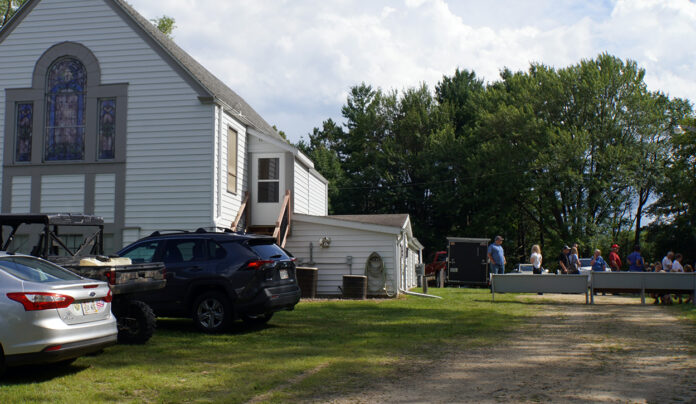
Ron Holcomb and his calliope. Submitted photo

Submitted by Dan Flory

ROCK ELM, WI – On Thursday, July 24, the Rock Elm United Methodist Church held its 130th Annual Ice Cream Social, with over 300 people in attendance. Once again, community members came to enjoy seven flavors of homemade ice cream—available both to take home and to savor at the church alongside sandwiches and pie or cake.

In addition to the food, guests were treated to live piano music in the dining room and a special performance from a calliope brought all the way from Missouri by longtime member Ron Holcomb.

Pastor Meg Erickson said, “It is really exciting to see the enthusiasm of both church members and friends who come from near and far to help make these events so successful.”

Sue Thompson, who oversees finances, noted, “All of the profits generated by the social will be donated to charities—local, regional, and even some international.”

We’re already looking forward to next year’s event.

Closed Beaches, green lakes, fish kills, polluted drinking water

0
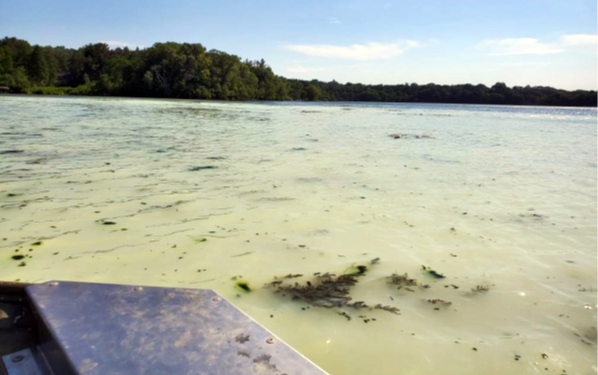
Lake Mallalieu algae event, July 2022, WI DNR. Submitted photo

Submitted by Kim Dupre, CURES

ST. CROIX COUNTY, WI – After several years of personal stories shared with local officials seeking action to rectify the degrading water quality in St. Croix County, citizens reached out to Dr. Chris Jones, Retired Faculty, University of Iowa, to conceptualize the challenges the St. Croix River Watershed is facing. Dr. Jones is also the author of the book Swine Republic, a history of Iowa’s water quality issues due to thousands of concentrated hog facilities.

In response, Dr. Jones created a map for the St. Croix River Watershed — which encompasses data from both Minnesota and Wisconsin counties along the St. Croix River – that quantifies the amount of waste excreted by farmed animals in terms of nitrogen, phosphorus and solids. Using population Census of Agriculture county profiles, created every five years by USDA, Dr. Jones determines the equivalent human population needed to excrete that same amount of waste.

The map for the St. Croix River Watershed is similar to ones Dr. Jones developed for Iowa and the Great Lakes Basin to visualize how concentrated our livestock production has become over the past few decades and its impact on our waters.

The St. Croix River was designated as one of the original Wild and Scenic Rivers in 1968 and became part of the National Park System. It is treasured by citizens on both sides of the river and an economic driver for tourism and recreation. But persistent and extended beach closings along the river have gotten the attention of everyday citizens. Hudson resident, Cally Fuchs shares, “I remember when we could swim in the St. Croix River all summer long! Now beaches are being closed well before the 4th of July for the rest of the summer! What has changed? Geese and ducks have always lived along the river and their waste is nothing new.”

According to Dr. Jones map, the human population represented by the number of livestock is equal to having an extra 3.25 million people in the St. Croix River Watershed! The waste generated by these “extra people” (livestock) is largely untreated and applied to fields in the spring and fall greatly increasing the risk of runoff into our streams, rivers, lakes and groundwater especially when crops are absent on the landscape. Human and non-agricultural waste is typically treated through local municipal wastewater treatment plants that MUST comply with the Clean Water and Safe Drinking Water Act standards before being released back into the environment.

Increased concentration of livestock over the past 50 years has changed how industrial manure wastewater is handled, allowing more cows in one location and fewer acres to spread their waste. Local soil tests on fields spread upon with industrial manure waste reveal oversaturation of nutrients in the ground. Rain events and snow melt cause these nutrients to end up in our ground and surface waters – closing beaches, causing fish kills, and turning our lakes green. While voluntary participation in conservation programs by producers is encouraged, commended and compensated with cost sharing, the bottom line is water quality in the St. Croix River still has not improved since 2012 when the St. Croix River was first listed on the EPA’s “Impaired Waters” list.

Elsewhere in the watershed, green lakes, fish kills and contaminated drinking water have gotten the attention of everyday citizens. Over 12% of rural residents in St. Croix County’s study group had excessive nitrates in their drinking water of over the 10 ppm health standard, while 77% of wells reported nitrate concentrations above 2 mg/L – a clear indication of impact of land-use practices on groundwater quality per the most recent Citizen Groundwater Monitoring Program – Year 6 Report. Most rural residents with contaminated drinking water in Wisconsin are not being assisted by any governmental agency at either the local, state, or federal level.

However, eight counties in southeastern Minnesota with similar geology and land use have nearly 9,200 rural residents with drinking water of over 10 ppm health standard (2.4% of their population) and EPA is working with Minnesota Pollution Control Agency to develop a work plan to identify, contact, test and offer alternative water to all impacted persons. In January 2025, a coalition of groups filed a lawsuit against the Minnesota Pollution Control Agency and the Minnesota Department of Agriculture, to compel state agencies to enact stricter rules on manure and commercial fertilizers.

Thus, concerned citizens formed St. Croix CURES (Citizens Uniting for Responsible Environmental Stewardship) who will be hosting the St. Croix River Watershed Clean Food & Water Forum on October 4, 2025, at the RCU Discovery Center at Camp St. Croix in Hudson, WI. Dr. Chris Jones will be speaking and presenting this map along with sharing his personal story and insights into our concentrated agricultural system as a retired research engineer from the University of Iowa. This event will be free and open to the public.

Tuesday Community Supper, August 2025

0
Contributed graphic

Submitted by Rosemary Donahoe, Tuesday Community Supper

BALDWIN, WI – August 5, 2025 Tuesday Community Supper August 5, 2025 Tuesday Community Supper.

Peace Lutheran Church will be serving the Tuesday Community Supper from 5pm – 6pm on Tuesday, August 5th in the Fellowship Hall at Gethsemane. The menu is Burgers, Salad, Chips & Bars/Cookies.

Tuesday Community Supper is served the first Tuesday of the month at Gethsemane Lutheran Church, 1350 Florence Street, Baldwin, Wisconsin, 54002. This is a free meal open to anyone in the community. Area churches, businesses and organizations take turns preparing and serving good nutritious food.

Dennis (Buz) Eugene Preston

0

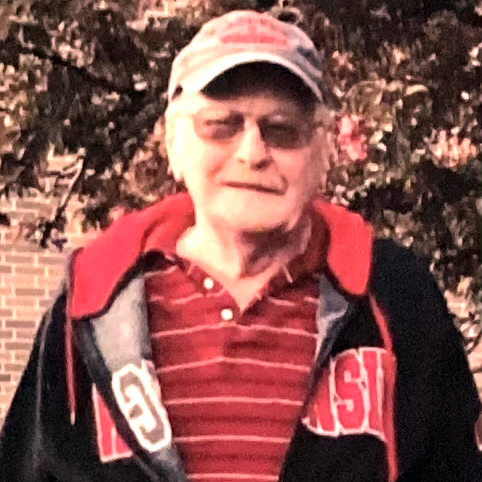
Dennis (Buz) Eugene Preston, age 77, passed away on Tuesday, July 23,2025.

Dennis was born on October 20, 1947, in Baldwin, Wisconsin to parents Donald and Shirley Preston. He attended school in the Baldwin-Woodville school district.  Dennis met his wife Carol Cunningham at a dance in New Richmond.  They were married on October 29, 1966.  To this union two children were born, daughter Stacey and son Brad.

Dennis lived most of his life in the Baldwin/Woodville area.  He was drafted into the Army and served from August 1967 to August 1969 in the Vietnam War.  Upon his return home, Dennis went to work at Eggen’s Supermarket as a meat cutter.  Over the years he worked for both Conrad’s Auto Salvage in Baldwin and Kadinger Auto Salvage in Downing.  After leaving the auto salvage business, he went onto work at Donaldson’s in Baldwin where he ultimately retired from.

Dennis was a devoted NASCAR fan.  He was dutifully in his favorite comfy chair every Saturday and Sunday during the racing season.  He even got the chance to attend a few races in person at Michigan International Speedway.  His tickets were handed down to Stacey and her husband Scott who eventually also brought their two boys to wrap up a three-generation experience.  He also was a fan and shareowner of the Green Bay Packers.  If he couldn’t watch them on tv, he would listen to them on the radio.  Dennis had sports on tv too much if you ever talked with his wife Carol.  He was an avid reader of western books, building quite a collection of William Johnstone titles and he could always be found putting puzzles together during the winters.

Preceding Dennis in death was his wife of 58 years, Carol; son Brad; parents Donald and Shirley Preston; sister Suzanne Zimmer, in-laws Arnold and Sue Cunningham; sisters-in-law Audrey Preston and Rita Heideman; nephew Jason Heideman.

Dennis is survived by his daughter Stacey (Scott) Hilmanowske; grandsons Jake Hilmanowske & Evan Hilmanowske (Emilia Rabitoy); brother Dan Preston; brothers-in-law Arnie (Judy) Cunningham, Leon (Sharon) Cunningham, Dennis (Lisa) Cunningham, Richard (Annette) Cunningham, Bob Heideman; sisters-in-law Sharon Cunningham and Pat Cunningham; many nieces and nephews as well as his dog Layla.

A celebration of life will be held on Wednesday, July 30th, at 1 p.m. at Zion Lutheran Church in Woodville.  Visitation will be from 11am to 1pm at the church with services to follow.  Interment will be at Sunset Cemetery in Woodville.

Keehr Funeral Home, Spring Valley, is handling arrangements.

Close encounters of the fun kind at 46th UFO Days

0
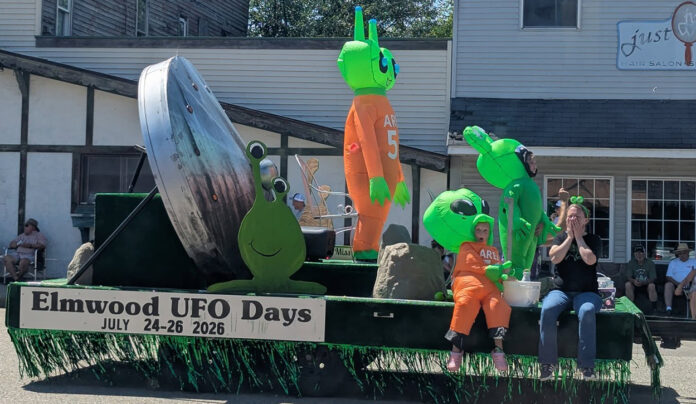
The streets were lined with people ready for the 46th UFO Days Grande Parade. Photo by Julie Huebel, Elmwood History Center

ELMWOOD, WI – UFOs, music, movies—and a lot of heat—descended on Elmwood last weekend as the village celebrated its 46th Annual UFO Days.  Elmwood has embraced its 46 years of UFO Days Celebrations – whcih has brought more attention to this quiet village—including a 2023 article in the New York Times—drawing visitors from near and far.

New this year was the debut of the “Ugly Truck Contest” on Friday, July 24. The winners of the first annual Ugly Truck contest were: 1st –  Don Brunner, 2nd– David Anderson, and 3rd -Greg Stark.

The Pierce County Historical Association had their “Elmwood’s UFOS in the News” display available again this year, in addition to their new county military display. The republication of Lavern Flanders’ book on the history of Rock Elm was also available for purchase.

To read this and other premium articles in their entirety, pickup the July 31, 2025 issue of the Sun-Argus newspaper. Click to subscribe for convenient delivery by mail, or call (715) 778-4990. Single issues are also available at area newsstands and our office in Spring Valley, WI.

Staying Put hosts second annual fish fry

0
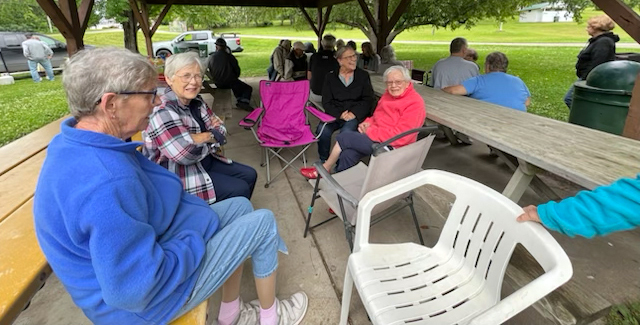
Despite the chilly weather, there were many smiles during the second annual Staying put fish fry. Submitted photo

ELMWOOD, WI – Despite the fall-like weather in July, local organization Staying Put held their second annual fish fry at Butternut Park on Wednesday, July 16, 2025.

Tim and Teresa Foslin, all-star volunteers with a penchant for catching walleye, provided the fresh caught fish, along with fries, coleslaw, dinner rolls and cookies.

This is the second year the duo has offered up their catch for Staying Put to host a fish fry for seniors, adults with disabilities, and community members. With over forty people in attendance from Spring Valley and Elmwood, the event was a big success.

To read this and other premium articles in their entirety, pickup the July 24, 2025 issue of the Sun-Argus newspaper. Click to subscribe for convenient delivery by mail, or call (715) 778-4990. Single issues are also available at area newsstands and our office in Spring Valley, WI.

Federal budget reconciliation bill “devastating” to Wisconsinites’ access to health care, food assistance

0
Contributed graphic

Submitted by DHS Media

MADISON, WI – On Friday, July 4, 2025, the president signed the budget reconciliation bill (the One Big Beautiful Bill Act), which will increase red tape for FoodShare and Medicaid members and will force 270,000 Wisconsinites to lose health insurance by taking away necessary support for them to afford health care coverage. Gov. Tony Evers and Wisconsin Department of Health Secretary Kirsten Johnson released the following statements:

“Republicans’ vote to cut popular programs like Medicaid will have a devastating impact on working families, kids, seniors, and Wisconsinites across our state. Wisconsinites will lose access to their health care and basic necessities like food that people depend on every day—and all so Republicans could pay for tax breaks for wealthy millionaires and billionaires. Make no mistake: the people of Wisconsin and our state will not be better off because of this bill,” said Gov. Tony Evers. “My administration will use every tool we can to respond to these cuts and we will continue doing everything we can to make sure every Wisconsinite has access to quality, affordable health care and the basic necessities they need to survive and thrive.”

“It’s incredibly important for Wisconsinites to understand how the decisions being made by the president and Congress negatively impact the health and nutrition of families across the state,” said Wisconsin Department of Health Services Secretary Kirsten Johnson. “We ask Medicaid and FoodShare members to keep their contact information up to date. We will share information as it becomes available.”

Medicaid and FoodShare members should make sure their phone number, email, and mailing address on file are up to date by going to ACCESS.wi.gov website or the MyACCESS smartphone app. We will notify them if and when they need to comply with any new rules or requirements by sending notices, texts, and emails. We will also announce some of the changes broadly, as appropriate, using channels like the Medicaid news webpageFoodShare news webpage, social media, news releases, and email.

The Department of Health Services will continue to provide updates to partners, providers, and the public as we receive further guidance about how to fully implement these policy changes from the federal government.

Today, the Department of Health Services issued an updated analysis detailing how the federal budget reconciliation bill will impact Wisconsinites who receive health care coverage and nutrition assistance through Medicaid and FoodShare. Below is an overview of impacts to Wisconsin’s Medicaid and SNAP programs. The Department of Health Services is continuing to analyze the federal budget reconciliation bill’s economic and fiscal impacts to the state of Wisconsin. More information about this analysis will be released in coming weeks.

The Department of Health Services agrees with the estimates released by the U.S. Congress Joint Economic Committee, indicating that a total of 276,175 Wisconsinites will lose health care coverage under both the Affordable Care Act (ACA) and Medicaid under this new law over the next decade.

Medicaid (programs that use a ForwardHealth card in Wisconsin, like BadgerCare Plus, Family Care, and Katie Beckett)

Approximately 1 in 5 Wisconsinites (or 1 million) receive health care coverage and services through Wisconsin’s Medicaid programs. Almost half of Wisconsin Medicaid members are kids. Anyone with a ForwardHealth card has Wisconsin Medicaid, including members of:

  • BadgerCare Plus
  • Children’s Long-Term Support Program
  • Family Care
  • Family Care Partnership
  • Family Planning Only Services
  • IRIS
  • PACE

The federal budget reconciliation bill:

  • Creates barriers to coverage and increases costs to taxpayers by implementing red-tape work requirements for adults ages 19 to 64 without dependents, with certain exceptions. This requirement will put an estimated 63,000 adults without dependents at the highest risk of losing coverage.
  • Limits Wisconsin’s options to finance Medicaid sustainably by putting a moratorium on new or increased provider taxes. Wisconsin was able to secure a last-minute provider rate increase when Gov. Evers signed the 2025-2027 state budget into law. We will be locked into this rate going forward.
  • Reduces access to reproductive health care for thousands of Wisconsinites by prohibiting Medicaid payments to some essential community clinics that provide primarily family planning or reproductive services for one year. Many Wisconsinites rely on community providers for family planning services, reproductive health, and related medical care.

SNAP (Supplemental Nutrition Assistance Program, known as FoodShare in Wisconsin)

Nearly 700,000 Wisconsinites receive food and nutrition assistance through FoodShare. FoodShare is Wisconsin’s Supplemental Nutrition Assistance Program (SNAP). Anyone with a Wisconsin QUEST card has FoodShare.

The budget reconciliation bill:

  • Makes it harder for parents, kids, and older adults to get food assistance by increasing red tape work requirements to include adults up to age 65. Previously the requirement applied to adults ages 54 and below. It also now applies to parents with children ages 14-17 who were previously exempt from the requirement. For every $1 in SNAP benefits, working families across Wisconsin generate $1.50 for our state’s economy by shopping at local stores and farmers markets.
  • Eliminates healthy eating education programs, removing $12 million annually from our community partners who help administer this SNAP education (SNAP-Ed) program and serve counties and Tribal Nations throughout the state. In 2024, SNAP-Ed programs provided 145,733 people with education about healthy eating, physical activity, and thrifty shopping. This bill eliminates this SNAP education (SNAP-Ed) funding entirely, with Wisconsin losing $12 million annually starting October 2025. For every $1 spent providing this program, $10 is saved in long-term health care costs.


DNR seeking volunteers to teach new hunters

0
The Wisconsin Department of Natural Resources (DNR) is seeking volunteers to teach and certify basic hunter education students and teach hunters of all experience levels practical outdoor skills. Submitted photo

Submitted by DNR Office of Communications

MADISON, WI – The Wisconsin Department of Natural Resources (DNR) is seeking volunteers to teach and certify basic hunter education students and teach hunters of all experience levels practical outdoor skills. Volunteer opportunities are available in all parts of the state.

Hunter education has a strong history in Wisconsin. Since the program’s creation in 1967, more than 20,000 volunteers have educated hunters in the state, certifying more than 1 million hunters. The program has also contributed to a significant decrease in hunting safety incidents.

The strength and success of the Hunter Education Program are due to the dedication and commitment of the volunteer instructors. The instructors deepen their connection to the state’s hunting heritage while shaping the next generation of Wisconsin hunters.

Basic Hunter Education – Basic hunter education is a firearm safety class that is required by law for anyone who intends to hunt independently. We rely on a statewide corps of about 4,000 volunteer hunter safety instructors to teach the standardized, internationally approved curriculum and administer the written and practical exams required for certification.

Volunteers must be certified to teach basic hunter education by apprenticing with an existing group of Hunter education instructors or attending a staff-led mini academy that takes volunteers through each lesson that instructors are expected to teach at a basic hunter safety class. Instructors must also pass an exam based on the DNR’s Hunter Education Policy & Procedure Manual.

Once certified, volunteer hunter education instructors should teach at least one class and attend an instructor recertification workshop every three years.

Advanced Hunter Education – Outdoor Skills And Learn to Hunt
Beyond basic hunter education, the DNR and our contracted partners (Becoming an Outdoors Woman, National Deer Association, Pass It On – Outdoor Mentors, Pheasants Forever and Raised at Full Draw) offer additional instruction and continuing education to hunters of all experience levels. We are seeking volunteers to coordinate and instruct advanced programs as the next step from basic hunter education. Training is currently optional and provided upon request.

  • Outdoor Skills – Outdoor Skills programs teach specific skills related to hunting and the outdoors, such as processing deer, shooting basics and cooking wild game. We have some lesson plans available for you to use as a guide, but if you have a hunting or shooting sports skill you can teach, reach out to our program staff to talk more.
  • Learn To Hunt – Beyond Outdoor Skills programs, the Learn to Hunt program is a unique opportunity in Wisconsin that allows volunteers to host educational mentored hunts outside of the normal hunting season. The program is a valuable and rewarding educational opportunity offered by the DNR for both participants and volunteers looking to find greater connection in the outdoors.
    • The Learn to Hunt program requires at least four hours of pre-hunt instruction to participants, and program volunteers must have at least five years of experience hunting the target species.

All hunter education volunteers must pass a DNR background check.

For more information about becoming a volunteer instructor or applying, visit the DNR website.

Weather

River Falls
clear sky
45.7 ° F
45.7 °
45.7 °
51 %
2.4mph
6 %
Fri
50 °
Sat
54 °
Sun
69 °
Mon
71 °
Tue
75 °