Home Blog Page 78

Queen’s Corner – Hammond Heartland Days

0
Here we are at the end of the parade, with our “Best Float” trophy, in the Hammond Heartland Days Annual Parade. Pictured (L to R) 2nd Princess Addisyn Wichelman, Syttende Mai Queen Katelyn Gustafson, First Princess Jessica Albers and Third Princess Adeline Haugen. Submitted photo

Submitted by 2024-2025 Syttende Mai Queen Katelyn Gustafson

WOODVILLE, WI – Hi Woodville! This past weekend, on Sunday, August 11, 2024, we (1st Princess Jessical Alber, 2nd Princess Addisyn Wichelman, 3rd Princess Adeline Haugen and I) headed over to Hammond for their Annual Hammond Heartland Days!

After our weekend off, it had seemed like forever since we’ve had a parade. We took the Troll Float, where we, once again, got many compliments on its new look. So much so, that we even won the trophy for “Best Float!”

We’re all looking forward to another busy weekend next week! North Hudson on Saturday and then we split for Boyceville and Star Prairie on Sunday.

Have a great week!

Blackhawk football gears up for 2024 season

0

BALDWIN, WI – Football is back! The Baldwin-Woodville Blackhawks (B-W) reported to practice on August 6 to prepare for the 2024 season. This year’s focus is on speed and athleticism as the team aims to build on recent success.

Coming off their second consecutive winning season, the Blackhawks achieved a 10-3 overall record and went 5-2 in Middle Border Conference (MBC) play in 2023. B-W also made it to Level 4 of the WIAA Division 4 Tournament for the first time since 2010.

This year brings a shift to the Middle Border Conference dynamic. Rice Lake, the defending MBC Champion and WIAA Division 3 State Champion, returns to the Big Rivers Conference after competing two seasons in the MBC. Meanwhile, Altoona joins the MBC after finishing in the middle of the Coulee Conference standings last season with a 3-4 conference record.

To read this and other premium articles in their entirety, pickup the August 15, 2024 issue of the Woodville Leader newspaper. Click to subscribe for convenient delivery by mail, or call (715) 778-4990. Single issues are also available at area newsstands and our office in Spring Valley, WI.

August Primary Election Results (Unofficial)

0
Submitted photo

PIERCE/ST. CROIX COUNTIES, WI – The Partisan Primary Election was held on Tuesday, August 13, 2024. While voters selected a party to vote for specific candidates, the spotlight was on the two referendum questions that were included.

The ballot questions read as follows:

Question One: “Delegation of appropriation power. Shall Section 35 (1) of Article IV of the Constitution be created to provide that the Legislature may not delegate its sole power to determine how moneys shall be appropriated?”

To read this and other premium articles in their entirety, pickup the August 15, 2024 issue of the Sun-Argus or Woodville Leader newspaper. Click to subscribe for convenient delivery by mail, or call (715) 778-4990. Single issues are also available at area newsstands and our office in Spring Valley, WI.

Gov. Evers joins PSC, DOE to announce Wisconsin’s launch of first home energy rebates

0
Governor Tony Evers. Photo from the Office of the Governor by Greg Anderson

Submitted by the Office of the Governor

MADISON, WI – Gov. Tony Evers on Friday, August 2, 2024, joined U.S. Department of Energy (DOE) Secretary Jennifer Granholm and Public Service Commission of Wisconsin (PSC) Chairperson Summer Strand in Milwaukee to announce the launch of the Home Efficiency Rebate (HOMES) Program. Wisconsin is the first state in the nation to launch the HOMES Program to deliver rebates to households undertaking whole-home, energy-saving improvements under the new program. Gov. Evers also announced Wisconsin received federal approval of its Home Electrification and Appliance Rebate (HEAR) Program application, meaning Wisconsin residents will soon be able to access instant discounts on purchases of efficient electric home appliances and equipment.

“The HOMES and forthcoming HEAR programs will go a long way in lowering costs for important energy efficiency and clean energy upgrades for households across the nation and here in Wisconsin,” said Gov. Evers. “Together, these programs will save folks and families up to $1 billion every year in energy costs and support roughly 50,000 jobs. This is proof that we don’t have to choose between protecting the environment and economic development and creating jobs—we can and are doing both.

“Throughout this entire process, we have been glad for the tremendous partnership between PSC and Focus on Energy, as well as the leadership of President Biden and the entire Biden-Harris Administration to support these and other important clean energy efforts,” Gov. Evers continued. “Building a brighter, stronger, clean energy future starts right at home, and I look forward to seeing how these programs will work to help lighten burdensome costs for folks and families across the state.”

Wisconsin’s launch of the HOMES program is part of the Biden-Harris Administration’s nationwide initiative to provide $8.8 billion in federal funding for states, territories, and Tribal Nations to lower energy costs and increase efficiency by making it cheaper to install cost-saving measures in homes such as heat pumps, electrical panels, and insulation. According to DOE, these energy-saving measures will save American households up to $1 billion annually in energy costs and support an estimated 50,000 U.S. jobs in residential construction, manufacturing, and other sectors. These investments also advance President Joe Biden’s Justice40 Initiative, which sets a goal that 40 percent of the overall benefits of certain federal climate, clean energy, affordable and sustainable housing, and other investments flow to disadvantaged communities that are marginalized by underinvestment and overburdened by pollution.

“The Biden-Harris Administration is helping families save energy and save money, and we’re not slowing down,” said U.S. Secretary of Energy Granholm. “Wisconsin is leading the pack of states building up their local workforce and keeping money in the pockets of their residents, all thanks to the Investing in America agenda.”

“Home energy rebates for clean and energy-efficient appliances and upgrades are good for the planet because they help cut pollution. But more importantly, they are good for Wisconsin families because they will save money by lowering energy bills,” said John Podesta, senior advisor to the president for International Climate Policy. “Congratulations to Wisconsin for being the second state in the nation to make these game-changing Inflation Reduction Act incentives available to their residents.”

According to DOE, many Americans spend a large portion of their monthly income on heating, cooling, and powering their homes—with some of the lowest-income families spending upwards of 30 percent of their income on energy bills. Overall, individual households could save hundreds on monthly energy bills and save thousands of dollars on energy-efficient home upgrades by participating in the Home Energy Rebate programs. To advance the objective of these programs, DOE is requiring that states and territories allocate at least half of the rebates to low-income households, defined as those earning 80 percent or less of their area median income. States and territories must also submit Community Benefits Plans to ensure good jobs and other economic opportunities are available. To help keep consumers informed and equipped with resources, DOE recently released a Consumer Bill of Rights framework and is encouraging state, territorial, and Tribal rebates programs to adopt it.

“I am proud to join Gov. Evers and Secretary Granholm to celebrate the launch of the Home Efficiency Rebate Program in Wisconsin,” said PSC Chairperson Strand. “After robust public engagement and planning phases, we thoughtfully designed Wisconsin’s Home Energy Rebate programs to ensure broad access without barriers and easy and effective participation through streamlined processes. The Home Energy Rebate programs are a win, win, win for Wisconsin, and we are excited to begin deployment to help households save energy, save money, and support our workforce!”

WISCONSIN’S HOME ENERGY REBATE PROGRAMS
In August 2022, President Biden signed the Inflation Reduction Act (IRA), which included $8.8 billion for the Home Energy Rebates programs. Wisconsin was allocated $149 million under the federal formula to administer the two Home Energy Rebates programs: HOMES and HEAR. Under HOMES, $74.8 million will be available to support whole-home energy efficiency improvements, including insulation, air sealing, heating, ventilation, and air conditioning upgrades. All Wisconsin households are eligible for HOMES, including multifamily buildings. Beginning Aug. 1, 2024, interested households can verify eligibility status and locate a registered contractor. By early September, households will be able to submit rebate requests through the online portal on the Focus on Energy website. More information about HOMES rebates and eligibility is available on line at: focusonenergy.com/ira-hear.

Under the HEAR Program, $74.5 million will be available to help low- and moderate-income households save energy and money by providing instant discounts to households that install high-efficiency home appliances and equipment, including heat pumps and electric appliances. HEAR rebates will be available beginning in fall 2024. More information about HEAR savings and eligibility is available at: focusonenergy.com/ira-hear.

According to DOE, residents will first complete a home energy assessment provided by a licensed energy auditor to determine the home’s upgrade needs and establish the estimated energy savings each upgrade would provide. Low-income households are eligible for a rebate to help cover the cost of the home energy assessment. Rebate amounts are based on household income and the amount of estimated energy savings.

For single-family homes, rebates will range between:

  • Up to $10,000 for those making less than 80 percent of their area median income (AMI).
  • Up to $4,000 for those making between 80 percent to 150 percent AMI.
  • Up to $3,000 for those making at or above 150 percent AMI.

DOE states that multifamily properties are also eligible. Rental units with low-income tenants are eligible for up to $10,000 in rebates, depending on estimated energy reductions.

Wisconsin is the first state to have both of its Home Energy Rebate program applications approved by the DOE. Focus on Energy, Wisconsin’s statewide energy efficiency program, will administer HOMES and HEAR rebates. Utilizing Focus on Energy’s existing statewide framework for delivering energy efficiency programs and rebates uniquely positions Wisconsin to expeditiously and effectively deliver HOMES and HEAR rebates to households across the state. Focus on Energy will continue to manage and maintain its existing programs separately to ensure transparency, accountability, and compliance.

On Thursday, the PSC approved the program design for the Training for Residential Energy Contractors (TREC) grant program. TREC funds will be used to help further develop Wisconsin’s residential energy efficiency and electrification workforce. Contractors trained, tested, and certified through this program can also be connected with projects funded by the Home Energy Rebates programs to help deliver these important initiatives. The initial round of the TREC competitive grant program will open in late 2024.

More information about the Home Energy Rebates programs is available at: focusonenergy.com/home-energy-rebates.

PCEDC, Momentum West, and Dunn County launch single-family housing toolkit

0
The PCEDC, Momentum West, and Dunn County have launched a single-family housing toolkit. Submitted image

Submitted by Joe Folsom, PCEDC

RIVER FALLS, WI – Pierce County residents and home builders can now use a unique “housing toolkit” designed to make it easier to buy and build homes in the county.

Through a joint effort of Pierce County Economic Development Corporation (PCEDC), Momentum West and Dunn County a four-part housing toolkit is now available on the PCEDC pcedc.com and Momentum West momentumwest.org websites. This toolkit has a section for aspiring homeowners, resources for communities, tools for developers and links to housing studies conducted in the region.

The “Aspiring Homeowner” section has financing basics, credit, and links to local resources. The financing basics for the aspiring homeowner covers topics such as “What’s Your Credit Score, How Much Can I Borrow? Debt to Income Ratio, Home Mortgage Types and Realtor Tips. The local resources toolkit provides links to local lenders, and County resources such as local building codes, zoning maps contacts, local builders/realtors and sample home plans.

The Community section provides brief list of resources, key partners, programs, and policy alternatives that may be considered by the residents, communities, developers, and other partner organizations of the Momentum West Region to address housing needs and meet local housing-related goals. It is intended to foster local creativity and partnership opportunities in addressing local housing needs.

The Developer section is designed to assist developers in identifying development opportunities and tools for financing the development of infrastructure.

Housing studies conducted in the region are included as the fourth component to assist communities, community members, government officials, and developers in understanding the needs, challenges, and opportunities in the local housing market.

We encourage communities and those engaged in providing single family housing to their community to review this new toolkit, provide feedback, link this tool on their websites and share it.

Currently only the Pierce and Dunn County toolkits are populated with the localized sections on the Momentum West website with the remaining eight counties in the Momentum West region in process.

DNR announces 2025 sticker design contest winner

0
Evan Strand’s submission depicts a night spent camping under the stars. Submitted photo

Submitted by Wisconsin DNR

RICE LAKE, WI – Rice Lake High School junior Evan Strand is the winner of the 2025 Wisconsin State Park and Forest vehicle admission sticker design contest. Congratulations, Evan!

This year, the Wisconsin Department of Natural Resources (DNR) received more than 150 entries from Wisconsin high school students for the 2025 State Park Sticker Contest. Many submissions depicted scenes of favorite outdoor recreation activities including camping, hiking, bicycling, paddling and climbing.

Strand’s submission captures the essence of a night spent camping under the stars. His linear design features the warm glow of a campfire as it illuminates an evergreen tree on a clear night. His winning design will be printed on state park and forest vehicle admission stickers and displayed on more than 500,000 vehicles.

The second-place winner is Jehiel Josh De los Santos, also of Rice Lake High School, and the third-place recipient is Joe Bellante of Catholic Central High School.

View the top 2024 contest designs on the DNR website. Thank you to everyone who submitted!

Roberts man killed driving his motorcycle

0
Contributed photo

Submitted by St. Croix County Sheriff Scott Knudson

TOWN of KINNICKINNIC, WI – On August 6, 2024, at 3:44 pm, the St. Croix County Emergency Communication Center received a call reporting a motor vehicle crash with injuries located in the intersection on STH 65 at CTH J in the Town of Kinnickinnic. A man from Roberts, Wisconsin was killed while driving his motorcycle.

Upon arrival, deputies found a 2004 Honda motorcycle crashed in the north bound lane of STH 65. Life saving measures were being performed on the motorcycle driver by citizens and officers from the River Falls Police Department, which had been requested to assist the St. Croix County Sheriff’s Office.

From witnesses and evidence at the scene, it appeared the motorcycle had been traveling north on STH 65, and was operated by Bill E. Lockhart, age 41, from Roberts, WI. Mr. Lockhart was following a GMC Sierra truck, being operated by Christopher M. Platson, age 36, from Woodville, WI. As the GMC Sierra began to make a right-hand turn (east bound) on to CTH J, a 2020 Freightliner straight truck, which had been traveling west on CTH J and had stopped at the stop sign, pulled into the intersection. The Freightliner was operated by David Jesus Herrera Gonzalez, age 30, from Baldwin, WI. As Mr. Lockhart continued north bound, he struck the side of the Freightliner truck that was now in the intersection. As a result of that collision, the Freightliner spun and struck the GMC Sierra truck, and both of those vehicles came to rest in the southeast ditch.

The operator of the motorcycle, Bill E. Lockhart, was pronounced deceased at the scene by the St. Croix County Medical examiner. He was not wearing a helmet at the time of the crash. Mr. Platson and Mr. Herrera Gonzalez were both wearing seatbelts. They were not injured in the crash.

The St. Croix County Sheriff’s Office received assistance from the River Falls Police Department, Wisconsin State Patrol, River Falls Fire Department, Pierce County Sheriff’s Office, St Croix County Highway Department, Allina EMS and the St. Croix County Medical Examiner.

Traffic on STH 65 was detoured during this incident. This marks the fourth fatality recorded by St. Croix County in 2024.

The crash remains under investigation by the St. Croix County Sheriff’s Office.

First confirmed West Nile Virus activity in Wisconsin

0
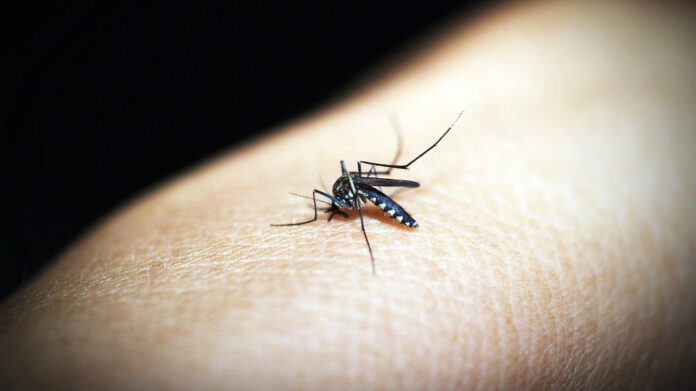
DHS urges everyone to protect themselves against mosquito bites. Submitted photo

Submitted by Elizabeth Goodsitt, DHS

MADISON, WI – The Wisconsin Department of Health Services (DHS) announces the first West Nile virus (WNV) infections in Wisconsin this year in a healthy blood donor from Washington County, whose blood screened positive for WNV, and in a dead bird from Chippewa County that tested positive for the virus. The positive blood donor is not considered a human case because they never developed any symptoms of WNV, which is required to be a probable or confirmed case. The infections confirm that there are mosquitoes infected with WNV in the state that can transmit the virus to other people and animals.

“The first activity of West Nile virus this year in Wisconsin is a reminder that we still need to take precautions to prevent mosquito bites even as summer winds down, as the risk of West Nile virus continues until the first frost. While West Nile virus and other viruses spread by mosquitoes pose a risk to all Wisconsinites, people who have weakened immune systems are at higher risk for significant illness,” said State Health Officer Paula Tran.

WNV is spread to humans, birds, and other animals through the bite of an infected mosquito. Mosquitoes acquire WNV by feeding on infected birds. The virus is not spread directly from person to person, animal to animal, or animal to person.

Most people (80%) who are infected with WNV do not have symptoms, so occasionally healthy blood donors may unknowingly donate blood while infected with WNV. To prevent spread of WNV through blood transfusions, all donated blood in the U.S. is tested for the virus. Any blood product that tests positive is removed from the blood supply.

DHS has monitored the spread of WNV since 2001. An average of 18 cases of WNV illness are reported among Wisconsin residents each year. WNV cases in humans have been reported from June through October; however, most people with WNV report becoming ill in August and September.

Those who become ill with WNV usually experience mild symptoms such as fever, headache, muscle ache, rash, and fatigue. However, some people (less than 1%) who become infected with the virus get seriously ill with symptoms that include high fever, muscle weakness, stiff neck, disorientation, mental confusion, tremors, confusion, paralysis, and coma. Older adults and those with compromised immune systems are at greater risk of developing severe illness that can be fatal. It is important people contact a health care provider if they suspect they have WNV illness.

The best way to avoid illnesses spread by mosquitoes is to reduce exposure to mosquitoes and eliminate mosquito breeding sites. Mosquito activity and the risk of WNV will continue through the rest of the summer until there is a hard frost (temperatures below 28 degrees Fahrenheit for at least four straight hours). DHS offers these tips to protect yourself and your family against mosquito bites:

Avoid Mosquito Bites – Apply an insect repellent with DEET, picaridin, oil of lemon eucalyptus, or IR3535 to exposed skin and clothing. Prior to heading outdoors, treat clothing with permethrin; do not apply permethrin directly to skin. Consider rescheduling outdoor activities that occur during evening or early morning hours, when mosquitoes that spread WNV are most active. Wear long-sleeves, long pants, and socks when outdoors to help keep mosquitoes away from your skin.

Mosquito-Proof Your Home – Prevent mosquitoes from breeding around your home by removing stagnant water from items around your property. Empty standing water that has collected in tin cans, plastic containers, flowerpots, discarded tires, roof gutters, and downspouts. Turn over wheelbarrows, kiddie pools, buckets, and small boats such as canoes and kayaks when not in use. Change the water in bird baths and pet dishes at least every three days. Clean and chlorinate swimming pools, outdoor saunas, and hot tubs; drain water from pool covers. Make sure window and door screens are intact and tightly fitted to prevent mosquitoes from getting into your home. Trim or mow tall grass, weeds, and vines since mosquitoes use these areas to rest during hot daylight hours.

Find more information on illnesses spread by mosquitoes and additional ways to Fight The Bite on the DHS website.

75th Reunion held by Spring Valley Class of 1949

0
Seven alumni from the Spring Valley High School class of 1949 gathered August 2 at the Phoenix in Baldwin for their 75th reunion. Front: Betty Wilk Hunter, Wilson; Joyce Iverson Brooke, Spring Valley; Garda Traynor Madsen, River Falls. Back: Eileen Schultz Streveler, Eau Claire; Carol Karnes Bevilll, Menomonie; John Reque, Evanston, Ill.; Russell Larson, Oakdale, Minn. Photo Credit: Allan Streveler

Submitted by John Reque, SV Class of ‘49

BALDWIN, WI – “Quite a group!” commented Carol Karnes Bevill who served on the reunion committee with me who sent the photograph from the reunion last Friday. This is a follow-up to the notice of the reunion we published in the July 18, 2024, Sun-Argus.

Seven members of the Spring Valley High School (SVHS) Class of 1949 gathered for their 75th Annual Reunion on Friday, August 2, 2024, at the Phoenix Restaurant in Baldwin, Wisconsin.

“We believe we are the first SVHS class to hold a 75th reunion,” said John Reque, who with Carol Karnes Bevill served on the reunion committee.

Of the 57 class members who graduated in 1949, nine are still living, three men and six women. The committee expected an attendance of between four and seven classmates. And seven alumni were able to attend this fun get together.

“It was just lunch,” said Reque, explaining that the event coincides with annual SVHS reunions at the Phoenix on the first Friday of August. “We’ve had 13 reunion gatherings – every five years since our tenth reunion in 1959 – and we’d like to keep them going.”

The largest SVHS class of ’49 reunion was the 50th, in 1999 when 32 grads met for a weekend that included a banquet at the Coachman Supper Club, tours of the old and new high school, and a St. Croix River brunch cruise.

1949 was an interesting year. It was the 10th and last year of the 1940s decade. On January 20, 1949, Harry S. Truman was sworn in for a full term, as President of the United States. In was on March 2, 1949, that the B-50 Superfortress “Lucky Lady II” landed in Fort Worth, Texas, United States, after completing the first non-stop around-the-world airplane flight (it was refueled in flight 4 times).

The 21st Academy Awards Ceremony was held on March 24. The movie “Hamlet” wins the Academy Award for Best Picture. It was on April 4, the North Atlantic Treaty was signed in Washington, D.C., creating the NATO defense alliance. Israel is admitted to the United Nations, as its 59th member on May 11, 1949.

Yes, 1949 was quite a year!

It wasn’t too long after that when 57 class members of Spring Valley High School graduated in 1949.

Congratulations to the remaining members of the Class of 49’ on your 75th Reunion!

How many manure spills is too many? St. Croix County residents scrutinize big farm’s new owner – Part I

0
Cows are milked in the parlor at Croix Breeze Dairy on June 11, 2024, in Emerald, Wisconsin. The 2,400-head dairy was recently sold to a new owner, who faces a skeptical community based on the farm’s record of manure spills under its previous owners. Photo by Ben Brewer for Wisconsin Watch

By Bennet Goldstein, Wisconsin Watch

EMERALD, WI – Gregg Wolf vows “to put a new step forward” on “a new day” at a northwest Wisconsin dairy.

Appleton-based Breeze Dairy Group, where he serves as CEO, purchased Emerald Sky Dairy in March, shortly after the Wisconsin Department of Natural Resources approved the St. Croix County farm’s expansion.

Along with 2,400 spotted cows, four odiferous freestall barns and a milking parlor, the company acquired an undesired aspect of the $11 million property: the dairy’s checkered reputation.

During its eight years under previous ownership, the farm — since rechristened Croix Breeze Dairy — racked up a litany of manure violations, including two major spills. One went unreported for months until an anonymous tipster notified authorities.

The incidents drew rebukes from county officials and residents, who complained that the state’s lax penalties would not deter future offenses.

Residents fear that the farm’s growth will only increase contamination of St. Croix County’s water, some of which already contains nutrients commonly found in crop fertilizer and manure that can make people sick.

Now, after growling excavators and dozers regraded parts of the property, Wolf has worked to improve the dairy’s image, with a farm face-lift and managerial improvements. Trash was removed. The lawn seeded and green. Even the cows, a special crossbreed with hides covered in patches of black, white and almond fur, will be replaced.

“We’re more of an open book. We don’t really have anything to hide,” he said in June over the hum of the milking parlor. “I think the former owners didn’t communicate the best, and I would say farmers, in general, we’re terrible at PR.”

Convincing locals that the recently expanded dairy can be a good neighbor will be a hard sell.

“One would like to hope that a change in management would bring better management than what we’ve had,” said Kim Dupre, a former Emerald resident, who moved to Minnesota after Emerald Sky’s first manure spill. “But I guess the proof will be in the pudding.”

Breeze has committed to safety and distanced itself from its predecessor, but residents — already skeptical of large farms and the state agencies that regulate them — also are scrutinizing the company’s record.

In April, Breeze had an inauspicious introduction when a broken roadside signpost pierced a contractor’s manure application hose, releasing 500 gallons into a ditch before workers contained the small spill.

And across roughly a decade, Breeze or its contractors spilled an estimated 147,000 to 202,000 gallons of manure in 11 other reported incidents, state records show.

“When you’re moving millions of gallons of manure, unfortunately, equipment breaks, people make bad decisions,” Wolf said. “We report ourselves as you’re supposed to legally do and work with the DNR and clean up anything that might have happened.”

Breeze errs on the side of “overkill” when it comes to reporting, Wolf said; reporting, cleaning up, learning from spills — it’s part of company culture.

Residents will be checking.

Croix Breeze Dairy sits on the corner of 250th Street and County Road G — a main drag for drivers, especially during the summer county fair season. It’s surrounded by dozens of households.

“He’s gonna have a lot of eyes on him,” Dupre said.

Wisconsin residents increasingly are informing state regulators of manure spills. Although researchers and authorities doubt their frequency truly is rising, communities like Emerald ask how many spills the state expects them to tolerate before authorities prevent problems from developing.

“That’s a word we don’t like to hear in relation to a CAFO,” said resident Barbara Nelson, who lives less than a mile from Croix Breeze. “Even if it isn’t a major spill, it’s still a spill.”

St. Croix County sees changes in farming and water quality
Five families formed Breeze Dairy Group in 2002, and the company has steadily grown. Before the Emerald Sky acquisition, it owned four large livestock farms — known as concentrated animal feeding operations, or CAFOs.

Breeze has a pending request with the state to enlarge another of its operations, which, if approved, could expand the company’s authorized capacity to more than 20,000 cows across five farms.

Wolf, a La Crosse County native who grew up on a 50-cow dairy, joined Breeze four years ago. He said herd sizes depend on the milk market and demand, and the company lacks a definitive target. It lacks a financial incentive to fill a dairy to maximum capacity if milk processors don’t pay enough to make a return on investment.

Although Croix Breeze’s new permit grants the farm authority to grow to 3,300 cows, Wolf said the company has no plans to exceed the current count. But broadly speaking, he said, farms need to expand as operational costs rise faster than milk prices.

In fact, said the dairy’s former owner, Todd Tuls of Rising City, Nebraska, the inability to expand Emerald Sky to his intended size of 5,000 to 6,000 cows was one reason he sold the operation.

St. Croix County is experiencing a familiar story of farm consolidation and growth.

Its 93,000 residents see less pasture, which dropped by half in just five years, and more soybean and wheat fields.

Mid-sized dairies also are disappearing, while larger operations have expanded their herds. Cows produce more milk and manure in increasingly centralized locations. Applicators spread the dung on farmland.

Doing so improves soil, incorporating nitrogen, phosphorus and potassium — nutrients plants use to grow. But fertilizing the ground in excess or subpar weather can contaminate water with pathogenic bacteria and viruses and nitrates, the latter of which, when consumed above the national health standard, increases the risk of birth defects, thyroid disease and colon cancer.

Alongside farming changes in St. Croix County, water contamination worsened in recent decades. The county’s share of private wells with unsafe nitrate concentrations rose from 10% to 13% between 2010 and 2022.

County conservation staff attribute the elevated levels to row cropping, exacerbated by the region’s porous bedrock, whose cracks and fissures enable water to rapidly enter the aquifer.

Many in the community also view Emerald Sky’s expansion as the harbinger of additional manure spills at a farm that has seen many in its history.

Environmental group alarmed over spills
In the winter of 2016, up to 275,000 gallons of liquid manure flowed through a cracked pipe into wetlands on the Emerald Sky property. Certain locations amassed deposits three feet deep.

Tuls told local media, and still maintains, that heavy snow obscured the spill from dairy staff, delaying detection, although prosecutors disputed his claim.

“Four feet of snow on it and people are like, ‘How do you not know?’” he said in an interview. “You don’t know because you can’t see it.”

In a 2019 incident that attracted attention, the dairy’s liquid manure was applied to a sloped field before it rained, allowing some to flow into a nearby creek, killing fish.

Tuls said the day’s weather was unexpected and the Department of Natural Resources could not prove the fish kill resulted from runoff linked to his field.

“We didn’t go to war with the DNR on that one ’cause it’s just like in our mind we handled everything that needed to be done,” he said. “I don’t know of a single perfect person in the world. People want cheese on their pizza and they want ice cream at Dairy Queen and they want milk in the fridge when they go get their cereal and they want half-and-half with their coffee and they don’t understand how hard it is to actually produce that milk.”

See the Woodville Leader next week for the conclusion of “How many manure spills is too many? St. Croix County residents scrutinize big farm’s new owner” with Part II.


Weather

River Falls
scattered clouds
72.9 ° F
72.9 °
72.9 °
37 %
1.7mph
38 %
Wed
75 °
Thu
70 °
Fri
64 °
Sat
57 °
Sun
54 °