
Submitted by Kim Dupre, St. Croix CURES
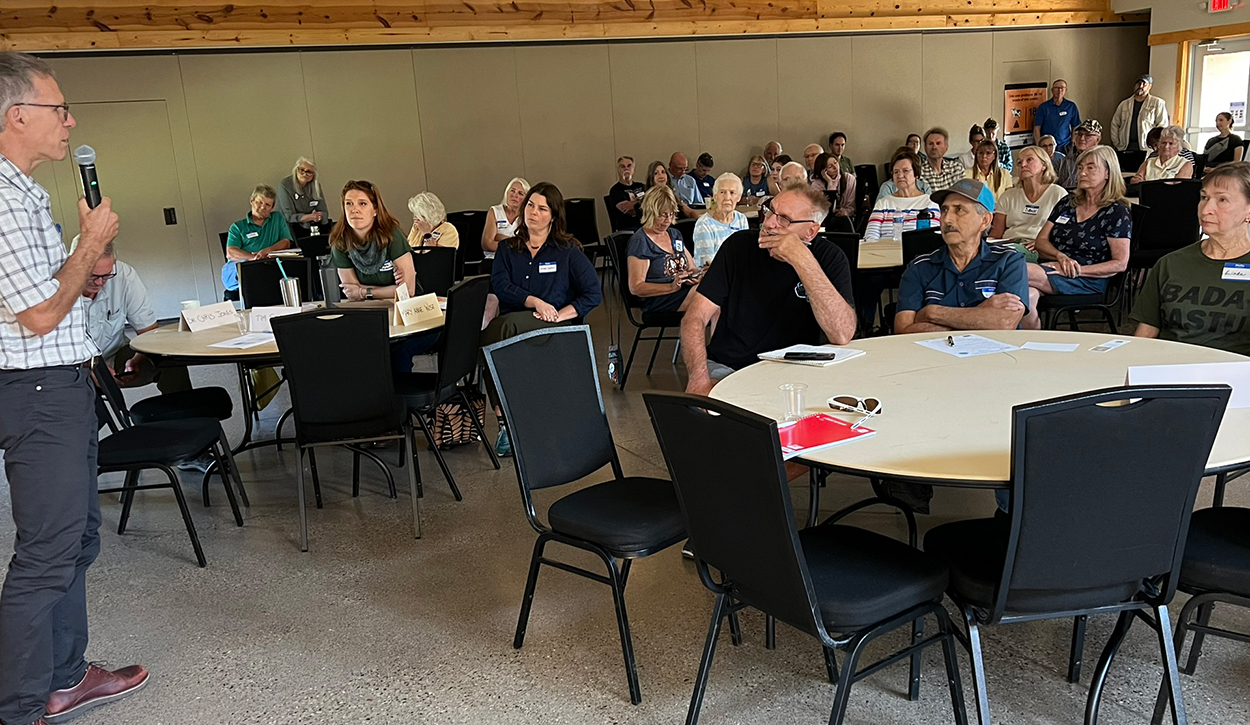
HUDSON, WI – “Don’t be Iowa,” exclaimed Dr. Chris Jones, retired water research engineer, University of Iowa. Jones was one of seven experts, including Sonja Trom Eayrs, Dr. Steve Oberle and Tim Stieber, that spoke October 4, 2025, at the St. Croix River Watershed Clean Food & Water Forum before a crowd of 120 attendees at the RCU Discovery Center at Camp St. Croix in Hudson, WI. Talks centered on the impact of industrial agriculture on ground and surface water quality in Western Wisconsin and what citizens, farmers, and even children can do in response.
The day started with the “WHY are we here.” This is Stillwater project, an afterschool program for Stillwater Middle School students, demonstrated how they utilized Minecraft to map the MN/WI St. Croix River Watershed. The potential industrial CAFO in Polk County was overlayed with current contaminated wells to visualize the impact on the entire watershed. We heard about their creation of robots for future water quality monitoring. They are our future and everything else today is about them.

Dr. Jones relayed information documenting the water quality trouble Iowa is experiencing due to 8,000 industrial hog operations and as a result, Iowa has earned national status as the #2 state for instances of CANCER and the only state with increasing cancer rates.
Sony Trom Eayrs shared how Big Agribusiness has taken over our rural areas for their own profits and decimated those communities. She documented the consolidation of our food systems that has led to the degradation of our water, land, and air, especially in rural spaces. The story of her family’s stand against corporate malfeasance gives hope on how ordinary citizens can “fight back.”
Dr. Steve Oberle and St. Croix’s County Conservationist, Tim Stieber, shared information on the unique karst landscape and how that affects our groundwater (NOTE: All 100,000 citizens in St. Croix County drink groundwater). Tim showcased how in the headwaters of the Kinnikinnick River (between Hammond and Baldwin) nearly 40% of homes currently have contaminated drinking water and his models revealed how wider adaptation of best management practices (cover crops, no till, streambank stabilization, etc.) could reverse the nitrate contamination due to 84% of the land being used for agriculture in that area. Dr. Oberle shared that any nitrate reading in drinking water over 2 ppm is cause for public health concerns for everyone (not just pregnant women and small children). High nitrate readings are an environmental indicator that other contaminants could also be in your drinking water.
We ended the day learning how and why getting our food from local producers, markets and food co-ops can build community and food resiliency. Some strategies for protecting our water and property values with township or county level operating ordinances currently used in Polk and Pierce Counties was shared by citizens involved in that process.
A performance of a joyful play from the Pop-Up Players, led by local educator Liz Malanaphy, ended the day reminding all, again, our work to protect our earth’s resources is done for future generations.
A recording of the presentations is available on YouTube at River Channel at youtube.com/@accesstv15.
Thank you to our sponsors; St. Croix Valley Foundation, Wisconsin Farmers Union, City of Hudson, Emerald Clean Water for All, and This is Stillwater.